
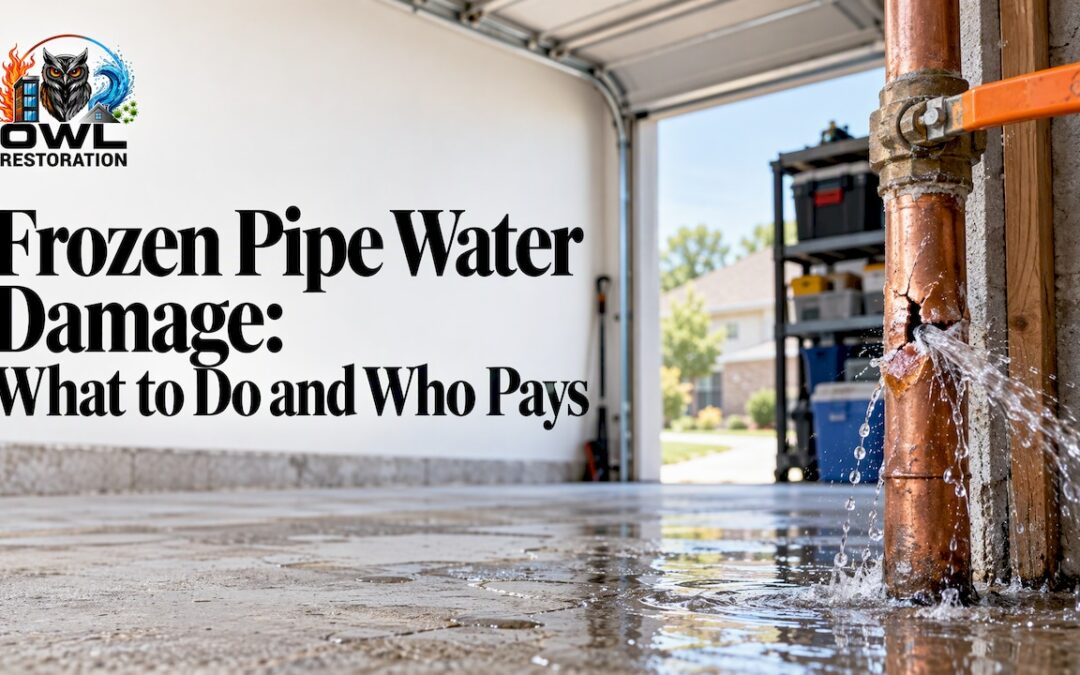
A frozen pipe rarely does its damage while it is frozen. The flooding starts when the ice melts and water pours through the split. The fastest way to limit the loss is to shut off the water, document everything, call your insurer, and get the structure dried within 24 to 48 hours. In Dallas-Fort Worth, Owl Restoration answers water emergencies around the clock and coordinates directly with your insurance company, so the cleanup and the claim move together.
TL;DR
- Ice expands and the trapped water pressure splits the pipe. The leak usually shows up after the thaw, so treat any freeze as a possible flood.
- Shut off the main water valve first, then open faucets to drain the line, and photograph the damage before you clean up.
- Homeowners policies generally cover sudden and accidental burst-pipe damage, but gradual leaks and neglect may not be covered. Call your insurer promptly.
- Wet materials need to be dried within 24 to 48 hours to keep mold from growing.
- Large, hidden or electrical-adjacent water damage calls for a professional crew, not a wet vacuum and a fan.
Table of Contents
- Why a frozen pipe turns into water damage
- Signs a pipe has frozen or burst
- What to do in the first hour
- How much damage a burst pipe can cause
- Does insurance cover frozen pipe damage?
- Drying and mold: the 48-hour window
- When to call a restoration professional
- Preventing the next freeze
- Perspective: our view on frozen pipe damage
- Getting help after a pipe bursts
- FAQ
- Sources
Why a frozen pipe turns into water damage
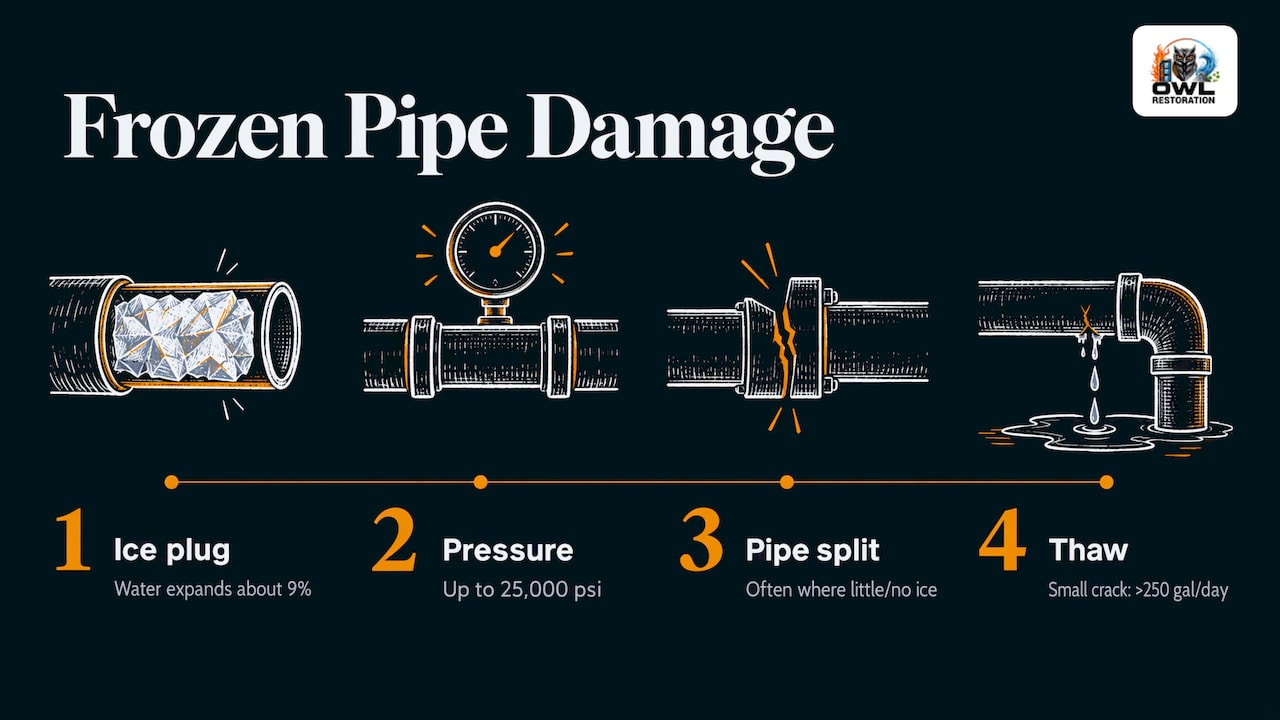
Water expands by about 9% as it freezes. The ice forms a plug, and the pressure builds in the trapped water between the plug and a closed faucet. This Old House reports that this pressure can climb as high as 25,000 psi until the pipe splits, often at a joint or another weak point.
Researchers at the University of Illinois’ Building Research Council, cited by MoneyTalksNews, found that the burst often occurs in a spot with little or no ice. That is why a pipe can look fine where it split and still have been frozen somewhere else along the run.
The split can stay sealed by ice for hours. When the temperature climbs, the water flows. State Farm says even a small crack can leak more than 250 gallons a day, enough to soak drywall and ruin floors.
Why North Texas homes are exposed
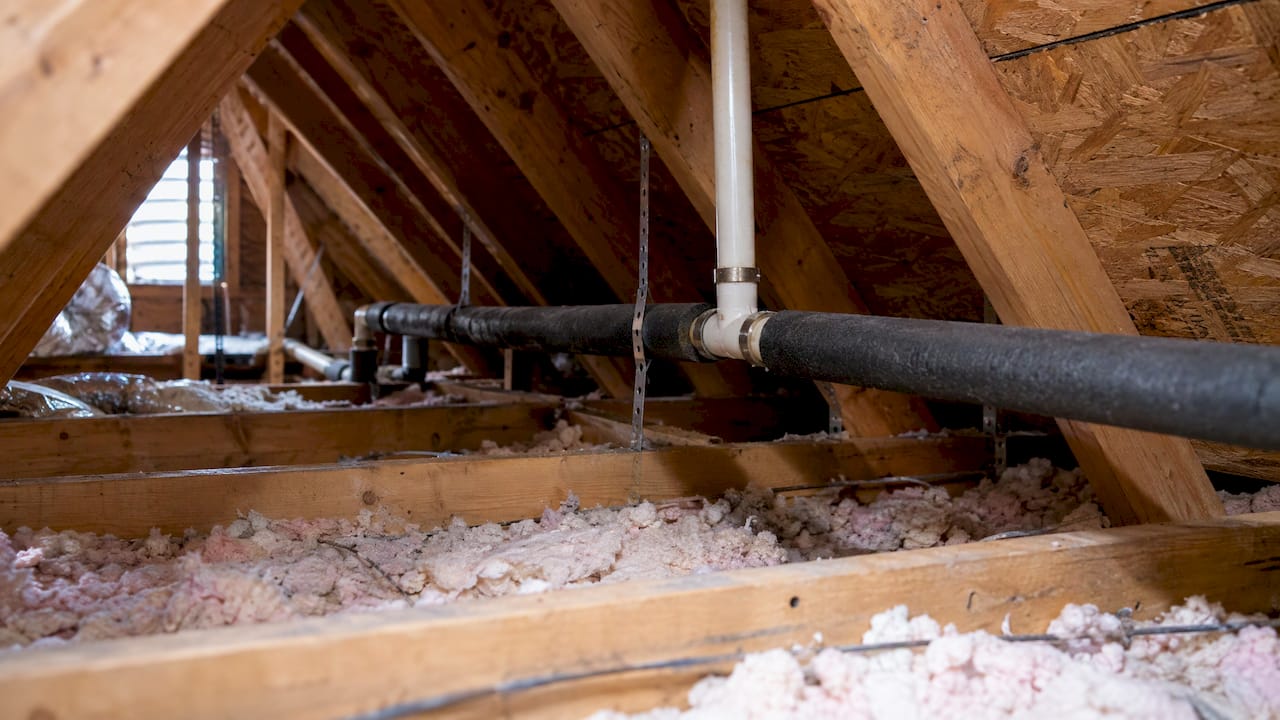
Homes in northern states are typically built with pipes inside the insulated envelope. AAA notes that homes in southern climates are more vulnerable because pipes often run through uninsulated areas, and owners may be less aware of the freeze risk. In Tarrant, Dallas, Johnson and Ellis counties that means attics, crawl spaces, garages and exterior walls. State Farm names these same uninsulated spaces as the most at risk when temperatures drop below 20°F.
Signs a pipe has frozen or burst
You do not need to see water to suspect a problem. Progressive lists these warning signs:
- Hissing, whistling or banging sounds in the walls
- New water stains on ceilings, walls or floors
- A sudden drop in water pressure
- The sound of running water when no tap is on
A faucet that gives only a trickle, or nothing at all, during a hard freeze points to ice in the line. If you see stains spreading or smell mustiness days later, our guide to the signs of water damage inside walls, floors and ceilings shows what to look for behind surfaces.
What to do in the first hour
The order matters. These steps combine guidance from The Hanover Insurance Group, State Farm and The Hartford.
- Shut off the main water valve. Find it before you need it. Everything else is slower if water keeps feeding the leak.
- Open faucets and flush toilets. This drains the remaining water out of the pipes.
- Cut power to affected areas if it is safe to do so. State Farm warns against using electrical appliances near standing water because of the electrocution risk. If water is reaching outlets or wiring, or the damage is extensive, leave the house and call for help.
- Photograph and video everything before you move or remove anything.
- Call your insurance agent or carrier. Do it the same day.
- Call a plumber to repair the pipe, and a restoration company to remove the water and dry the structure.
If the pipe is only frozen and has not burst, The Hartford says you can turn on the faucet and gently warm the frozen area with a hair dryer, electric heating pad or space heater. Never use an open flame such as a propane heater or blowtorch. Shut off the main valve and call a plumber if no water flows, you cannot find the frozen section, or the pipe looks bulged or cracked.
Where people go wrong
The most common mistakes are waiting for the thaw to see what happens, cleaning up before documenting, and drying only what is visible. Water travels. It moves along framing, into wall cavities, under flooring and above ceilings. For a full plan, see our 48-hour action plan after water damage.
How much damage a burst pipe can cause
Costs depend on how much water escaped, where, and how long it sat. Progressive describes water seeping into walls, ceilings, floors and the foundation, with basement flooding that can weaken structure and, in the worst cases, ceilings or walls that collapse.
The published numbers give a sense of scale:
| Figure | Source |
|---|---|
| About $11,650 average loss per water or freezing claim | The Hanover Insurance Group |
| $30,000 average State Farm frozen-pipe claim, 2024 through June 2025 | MoneyTalksNews |
| $5,000 or more to repair frozen pipes, per the Insurance Institute for Business and Home Safety | The Hartford |
| $100 to $2,000+ for the plumber alone, depending on pipe location | AAA |
The AAA range covers the pipe repair only. It rises significantly when drywall or cabinets must come out to reach the pipe. The water extraction, drying, demolition and rebuild are separate scopes of work, and they are where claims grow.
This Old House also points to the long tail: electrical hazards where water touches outlets or wiring, and mold, wood rot and structural weakening when water is not dealt with quickly.
Does insurance cover frozen pipe damage?
Usually, yes, for the sudden kind. The National Association of Insurance Commissioners (NAIC) states that homeowners policies cover damage from a sudden and accidental discharge from a plumbing system, and a burst pipe fits that description. Your deductible still applies, and the details depend on your policy.
The limits to know:
- Gradual damage is generally excluded. The Hartford states that water damage from pipes leaking over time, or seepage from cracks, is generally not covered.
- Outside floodwater is excluded. A separate flood policy is available through the National Flood Insurance Program and some private insurers.
- Prevention can matter. The NAIC, cited by MoneyTalksNews, says coverage can hinge on whether the homeowner took reasonable steps, and insurers may deny frozen-pipe claims if the home was left unheated. The Texas Department of Insurance advises asking your agent whether your policy covers sudden and accidental water damage, and notes that a policy might not pay if you skipped protective steps such as keeping the heat on.
What to have ready when you call your insurer
The Hartford suggests having your policy number, a description of what happened and what was damaged, a phone number where you can be reached, and contact information for any contractors you have hired. Keep receipts for emergency repairs and temporary living costs. Take photos and video before cleanup, and make a room-by-room list of damaged belongings.
Texas homeowners can read the state’s plain-language advice on winter storms and insurance at the Texas Department of Insurance. If you are a property manager or business owner, check your commercial policy’s language on frozen pipes and vacancy before the season starts.
Drying and mold: the 48-hour window
The EPA’s guidance is blunt: dry water-damaged areas and items within 24 to 48 hours and, in most cases, mold will not grow. That clock starts when the water escapes, not when you notice it, which is why a pipe that burst in an attic over a weekend can already be past it.
A fan and a wet/dry vacuum handle a small, visible spill. They do not dry the inside of a wall, the insulation above a ceiling, or the subfloor under laminate. Moisture trapped there is how a frozen-pipe incident becomes a mold problem a few weeks later.
Towels, linens and clothing soaked in the leak also need to dry fast. If your dryer is out of reach, these tips for drying clothes without a dryer can help while the rest of the house gets attention.
When mold is already in the picture
If you find musty odors or discoloration after a freeze event, testing tells you what you are dealing with before anyone opens a wall. Our residential mold testing and inspection is $575 one-off, with additional samples at $75 each. Commercial testing and inspection is $975, with additional samples at $95 each. Our residential mold remediation protocol is $1,000 one-off. The details are on our mold testing page. Mold in hard-to-see places is covered in our guides to crawl space mold and attic mold.
When to call a restoration professional
Call one when any of these apply:
- Water has reached walls, ceilings, insulation or flooring you cannot lift yourself
- The leak ran for hours before you found it, or the source was in an attic or wall cavity
- Water is near outlets, panels or wiring
- You are filing an insurance claim and need documentation of the loss and the drying
- You manage a commercial property or several units and cannot afford downtime
A plumber fixes the pipe. A restoration company removes the water and dries the building so that what is behind the finished surfaces does not rot. You usually need both, in that order or at the same time. Ceiling damage is a frequent result of attic and upstairs pipe bursts, and our guide on ceiling water damage repair explains what is salvageable.
Preventing the next freeze
This is the part that protects both your house and your claim. The Texas Department of Insurance and AAA recommend:
- Before the freeze: wrap pipes in unheated areas, drain sprinkler systems, and disconnect and drain outdoor hoses. The Hartford recommends foam pipe insulation on pipes in the basement, garage, attic and exterior walls, plus frost-proof hose bibs or winterized outdoor spigots.
- During the freeze: open cabinet doors under sinks and let both hot and cold faucets drip or trickle before bed. AAA says more than a slow drip helps relieve pressure.
- Heat: keep the thermostat the same day and night. The Hartford advises a minimum of 55°F when temperatures reach 20°F or below, and AAA gives the same 55°F floor when you are away.
- If you leave town: keep the heat on, or shut the water off at the main valve. State Farm points out that shutting off the water disables fire sprinklers, a real consideration for property managers.
- Power outage: The Hartford suggests a back-up power source such as a portable generator.
The Red Cross, as relayed by MoneyTalksNews, also recommends closing the indoor shutoff valve to outdoor faucets and leaving the outside faucet open so the line drains.
Perspective: our view on frozen pipe damage
In North Texas, a hard freeze is rare enough that most people have never rehearsed it. Then it happens, the thaw comes, and a home has water running through a wall nobody can see.
What we want owners to understand is that the pipe repair is one job and the water damage is another. The 24 to 48 hour window for drying is real, and it is why we respond around the clock across Dallas-Fort Worth. We address water leaks, fire damage and mold growth within that window.
Our team is certified, and we handle the work from the first mitigation steps through full reconstruction, so you are not coordinating a plumber, a drying crew and a builder on your own. We also coordinate directly with your insurance company. That takes a large share of the paperwork stress off you while the building is drying.
If you have just had a pipe burst, shut off the water, take your photos and call us. We will start from there.
Dustin
Getting help after a pipe bursts
Owl Restoration handles water damage restoration for homes and commercial properties in Tarrant, Dallas, Johnson and Ellis counties, from emergency mitigation to rebuild, with direct insurance claims coordination and 24/7 rapid response. Contents pack-out is available when furniture and belongings have to leave the house while the work is done.

Start with our water damage restoration service, or read how our emergency water restoration works in the first 48 hours. If the damage runs into walls and flooring that must be rebuilt, see our reconstruction and build-back services.
FAQ
Will my pipes freeze in one night?
They can, if temperatures fall below about 20°F and the pipes run through uninsulated spaces such as attics, crawl spaces or exterior walls, as State Farm notes. Pipes inside heated interior walls are at lower risk. Letting faucets drip and opening cabinet doors overnight reduces the chance.
Do I need to turn on all faucets to keep pipes from freezing?
Focus on the faucets served by pipes along exterior walls or in unheated areas. The Texas Department of Insurance advises letting both cold and hot taps drip before you go to bed during a freeze. Open the cabinets under sinks so warmer room air reaches the pipes.
Can pipes still freeze if the water is turned off?
Shutting the water off at the main valve lowers the risk of a burst, because there is less water to leak. Water left in the lines can still freeze, which is why the Red Cross advice relayed by MoneyTalksNews is to drain outdoor lines. Remember that shutting off the water also disables fire sprinklers.
Is a frozen pipe burst covered by homeowners insurance?
The NAIC says homeowners policies cover sudden and accidental discharge from a plumbing system, so a burst frozen pipe is generally covered, subject to your deductible. Slow leaks and damage from neglect may not be. Call your insurer right away and ask what your policy says.
How long do I have to dry things out before mold grows?
The EPA says that if wet materials are dried within 24 to 48 hours, mold will not grow in most cases. Water inside walls and under floors is the hard part, which is where professional drying equipment makes the difference.
Sources
- Everything to Know About Frozen Pipes and Why They Burst, This Old House
- A Burst Pipe Averages a $30,000 Claim, MoneyTalksNews
- Frozen Pipes? Not So Nice! Beat Winter Water Woes, State Farm
- A Guide to Preventing Frozen Pipes, AAA
- What to Do When a Pipe Bursts, Progressive
- What to do when a pipe bursts, The Hanover Insurance Group
- Your Guide to Protecting Your Home From Water Damage, The Hartford
- Winter storms: Tips for preparing your house and pipes, Texas Department of Insurance
- A Brief Guide to Mold, Moisture and Your Home, EPA