
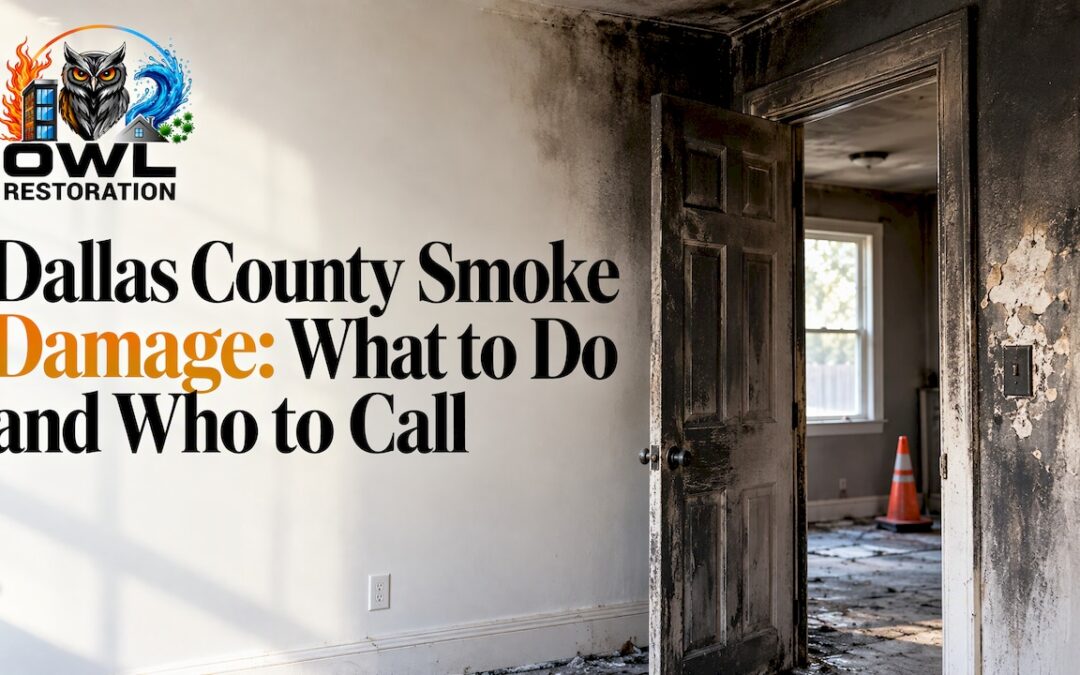
Smoke damage is fixable in most homes and businesses, but it is not a cleanup you can leave for a week. Smoke residue is acidic and keeps damaging surfaces after the flames are out, according to the City of Bloomington, MN fire department. The best outcome in Dallas County comes from one restoration team that handles the first hours, the soot and odor work, the insurance paperwork and any rebuilding. That is how we work at Owl Restoration: we respond around the clock across Dallas-Fort Worth and carry a job from mitigation through reconstruction.
TL;DR
- Do not go back inside until the fire department says it is safe. Then document everything before anything is cleaned or thrown away.
- Smoke comes in three residue types (dry, wet, protein), and each one needs a different cleaning approach.
- Texas homeowners policies generally cover smoke damage from a fire, and the policyholder pays the deductible.
- Heavy or structural damage calls for a professional crew, not a weekend of scrubbing.
- One team that handles cleanup, contents, claim documentation and rebuild keeps the job moving and reduces your stress.
Table of Contents
- The first hours: safety before cleanup
- Not all smoke is the same
- How professional smoke cleanup works
- What can be saved and what gets replaced
- How long smoke odor lingers
- Insurance and smoke damage in Texas
- Timeline and cost
- Get smoke damage handled in one call
- FAQ
- Sources
The first hours: safety before cleanup
The first rule is to wait. FEMA’s guide for smoke-damaged homes says to wait until local officials allow re-entry, such as the fire department. Hidden problems include weakened floors, electrical damage and gas leaks. If you suspect a gas leak, call 911.
The U.S. Fire Administration warns that soot and the dirty water left behind may contain things that can make you sick. It advises being very careful when entering the home or touching fire-damaged items, even after the fire is out.
Once you are cleared to go in, FEMA lists this protective gear:
- goggles
- an N95 or P100 respirator
- gloves
- long pants and a long-sleeved shirt
- closed-toe shoes
The Colorado health department adds that surgical and cloth masks do not protect your lungs. It says people with heart or lung disease, older adults and pregnant women should avoid cleanup, and children and pets should stay away. If that describes someone in your household, let a crew do the work.
In the first day, a few small actions help. If it is safe, open windows. Cover HVAC vents with cheesecloth to catch soot. Lift brass and copper items off surfaces so they do not corrode. Photograph all visible smoke damage. These steps come from Bloomington’s after-fire guidance. FEMA also says to keep the HVAC system off until its condition has been assessed. Running it can pull soot through the whole building.
If the fire has left you without power, gas or a safe structure, our 24/7 emergency restoration team can secure the property while you sort out the rest.
Not all smoke is the same
A kitchen grease fire and a smoldering couch fire leave very different messes. Insurance regulators describe three residue types that adjusters assess:
| Residue type | Typical source | What it looks like | Why it matters |
|---|---|---|---|
| Dry smoke | Fast-burning fires | Powdery, easier to wipe | Can damage electronics and wiring |
| Wet smoke | Smoldering fires | Thick, sticky | Permanent staining and strong odors |
| Protein residue | Burnt kitchen food | Invisible or an amber film | Permanent discoloration and intense odor |
Protein residue is the one homeowners underestimate. A room can look clean and still smell terrible. Wet smoke smears when it is wiped with the wrong method. Identifying the residue type first decides which products and techniques go on your walls, which is why a trained crew starts with assessment, not a mop.
How professional smoke cleanup works
FEMA sorts smoke, soot and ash damage into none, light, moderate and heavy. Light damage is minor. Moderate damage needs detailed cleaning. For heavy damage, FEMA says to bring in a professional if detailed cleaning does not work. Where there is visible structural fire damage, the home should not be entered until the fire department clears it, and professional contractors should do the work. You can read the full scale in FEMA’s homeowner guide.
In most Dallas County fires, the damage reaches rooms far from the flames, because smoke travels through the whole house. Here is the sequence a restoration job follows, and where each step goes wrong:
- Assess and protect. The crew documents each room, checks utilities and shuts down electronics. The common mistake is rushing in before the damage is recorded, which weakens a claim.
- Keep soot from spreading. Foot traffic and a running HVAC system grind soot into carpet and push it into ducts. FEMA’s protocol calls for avoiding foot traffic and keeping the system off until bulk soot is removed.
- Remove loose soot. Hard floors, carpets (with a HEPA vacuum, which traps fine particles), exterior siding and windows are cleaned first.
- Wash surfaces top down. Ceilings and walls are damp-wiped from the top down with mild detergent. Wiping the wrong residue the wrong way smears it deeper.
- Handle contents. Clothing, linens and belongings are laundered or cleaned. Our contents pack-out service moves items out of the affected space so they are not re-soiled while the structure is worked on.
- Treat odor. This comes only after the cleaning is thorough (more on that below).
- Rebuild. Drywall, flooring and cabinetry that cannot be saved are replaced. With our reconstruction and build-back, the same company that cleaned the property can rebuild it.
For a closer look at the process, see our guide to fire and smoke restoration.
What can be saved and what gets replaced
Most hard surfaces, wood furniture and fabrics can be restored. Some items cannot. United Policyholders’ smoke restoration guide says:
- Every contaminated surface should be cleaned.
- Food in paper, cardboard or plastic packaging should be thrown away.
- Carpet padding acts like a sponge and cannot be cleaned. If odor persists, it must be removed and replaced.
Keep a list of what you discard, with photos, and hold items until your adjuster has inspected when possible. That list becomes your contents claim.
How long smoke odor lingers
There is no single answer. The Colorado health department says soot and ash deposit particles and volatile organic compounds such as benzene on surfaces, and that chemicals keep releasing into indoor air for weeks after a fire, declining over time. How fast a home clears depends on how much residue settled, how porous the materials are (carpet, upholstery, insulation) and whether the ducts were contaminated.
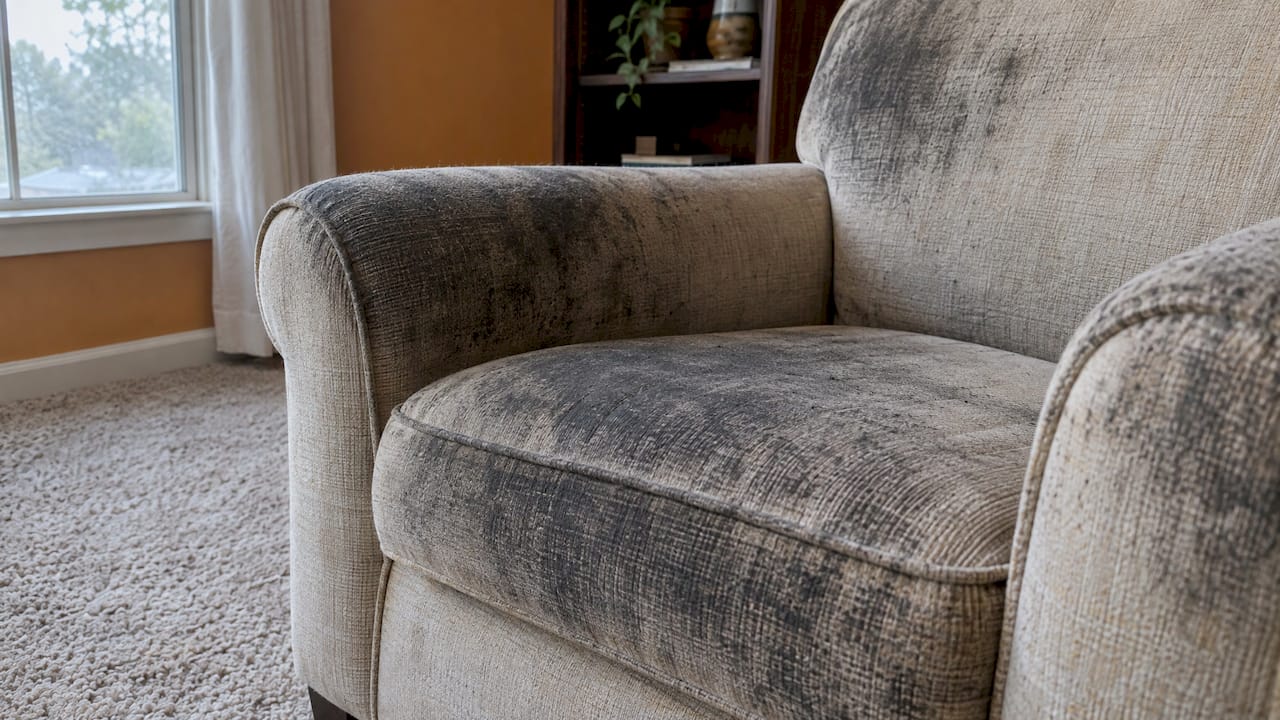
A January 2026 report from Lawrence Berkeley National Laboratory, based on interviews with 10 remediation companies, found agreement that thorough cleaning is the essential first step. Deodorizing methods such as ozone, hydroxyl or thermal fogging come after that. The takeaway is that odor is solved at the source: residue is removed first, then the air is treated.
Our page on smoke odor removal explains what works after a fire and when to call a pro.
Insurance and smoke damage in Texas
The Texas Department of Insurance says most homeowners policies cover property damage caused by smoke from a fire. It generally advises making temporary repairs to protect the property and waiting for an adjuster to inspect before making permanent repairs. TDI’s blog also notes that smoke damage is typically covered and the policyholder pays the deductible. Check your own policy for limits and exclusions, and talk to your agent or adjuster about your specific coverage.
Regulators describe standard policies as having three protections: dwelling coverage, personal property and additional living expense. The last pays for temporary housing and meals while you cannot live at home.
The same regulator’s claim steps are worth following:
- Photograph and video before cleaning anything, and do not discard items until the adjuster inspects.
- Ask for a full smoke inspection that includes attics, crawl spaces, insulation and HVAC.
- Keep receipts for temporary housing and meals, and prepare a home inventory.
- Request a reinspection if odors or residue appear later, because smoke damage can be progressive.
FEMA also tells homeowners to record wipe-test results with notes and photographs for the carrier before remediation begins. If a fire also damaged your roof, roof inspections for insurance claims in Texas follow a similar documentation routine.
We coordinate directly with insurance companies, so you are not relaying messages between the adjuster and the crew. For commercial properties, see our commercial restoration services.
Timeline and cost
Smoke cleanup scope varies widely: a single kitchen with protein residue is a different job from a whole-house fire with HVAC contamination. For that reason we do not publish a price for fire damage restoration. The scope drives the estimate, as does whether the work includes contents, ducts or rebuilding, and your insurance carrier often shapes the approved scope. Our team responds to property damage within 24 to 48 hours, and speed matters because residue keeps working on surfaces while you wait.
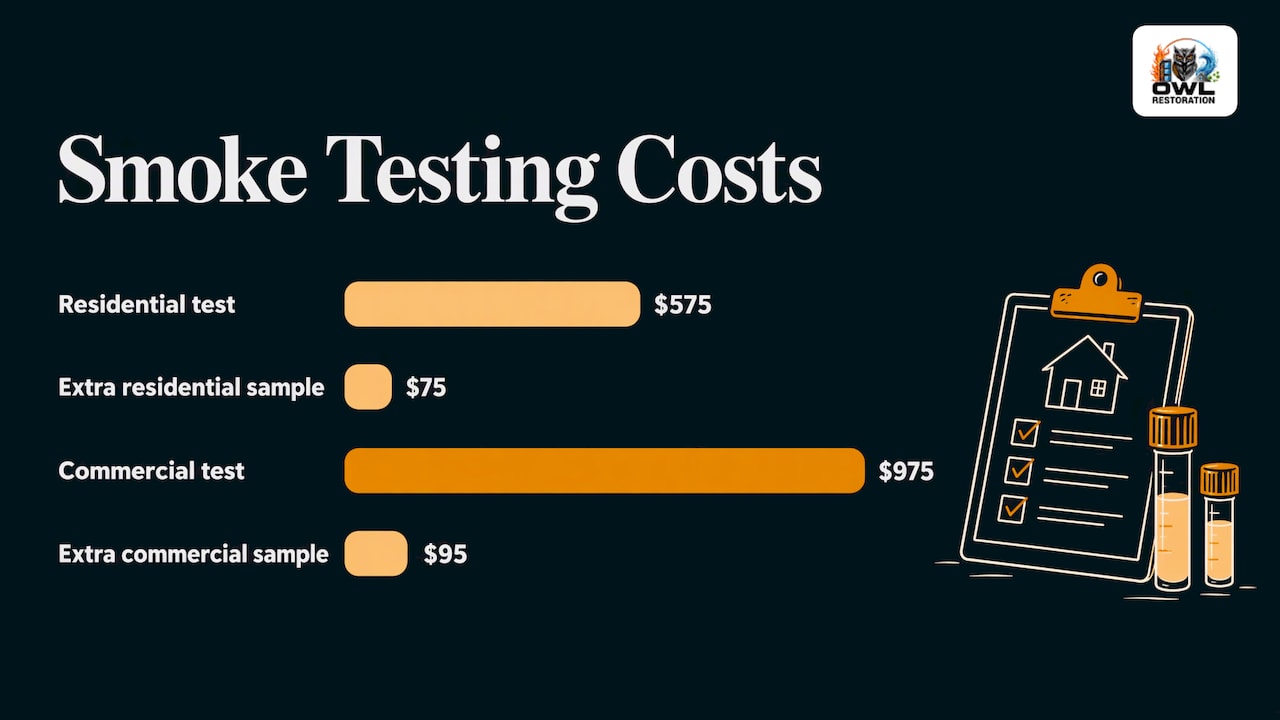
Firefighting can leave moisture in walls and floors too. If you are concerned about hidden moisture or mold after a fire, our residential mold testing and inspection is $575, and each additional sample is $75. Commercial testing is $975, with additional samples at $95.
Our perspective
After a fire, people want to start scrubbing right away. We understand the instinct, but smoke damage rewards a plan. Document first, keep soot from traveling, and match the cleaning method to the residue.
The hard part of a fire loss is rarely one task. It is the cleaning, the contents, the adjuster, the drywall and the rebuild, all at once, while you are displaced. That is why we built our service to cover the full path, from emergency mitigation through reconstruction, with certified professionals and direct coordination with your insurance company.
When one team owns the whole job, nothing falls between trades, and the paperwork matches the work that was done. That is the experience we want every Dallas-Fort Worth property owner to have.
Dustin
Get smoke damage handled in one call
Owl Restoration provides fire and smoke damage restoration, contents pack-out, biohazard cleanup and reconstruction for homes and businesses in Dallas-Fort Worth, with 24/7 rapid response and insurance claims assistance. Learn more on our fire damage restoration page, or see all services across Dallas-Fort Worth.
If you are a property manager or business owner, we handle commercial properties as well, so tenants and operations can get back to normal sooner.
FAQ
Is smoke damage fixable?
Yes, in most cases. Hard surfaces, wood and fabrics can usually be cleaned once the right method is matched to the residue type. Porous items such as carpet padding may need replacement if odor persists, and packaged food should be discarded. Heavy or structural damage is a job for professionals.
Is smoke damage covered by homeowners insurance?
The Texas Department of Insurance says most homeowners policies cover property damage from fire smoke, with the policyholder paying the deductible. Coverage details depend on your policy, so confirm limits and exclusions with your insurer. Photograph everything before cleaning and keep receipts for temporary housing.
How long does smoke linger after a fire?
Chemicals from smoke and soot can keep releasing into indoor air for weeks, decreasing over time. Odor clears faster when residue is removed from surfaces, porous materials and ducts. Treating the air without removing the source rarely lasts.
When is it safe to go back inside?
Only after local officials such as the fire department allow re-entry. Then wear a fitted N95 or P100 respirator, gloves and protective clothing. If you suspect a gas leak, call 911.
Sources
- FEMA: Homeowner’s Guide to Risk Reduction and Remediation of Residential Smoke Damage
- U.S. Fire Administration: After the Fire
- City of Bloomington, MN: After the Fire
- Colorado Department of Public Health and Environment: Indoor air quality after a fire
- Washington Office of the Insurance Commissioner: Smoke damage and your insurance
- United Policyholders: Smoke Restoration Guide
- Lawrence Berkeley National Laboratory: Restoring Homes After Wildfires
- Texas Department of Insurance: Fire/Smoke/Explosion Damage FAQ
- Texas Insurance Blog
- Roof Inspection for Insurance in Texas