
After water damage, do these things in order: make the space safe, stop the water, photograph everything, call your insurer, and start removing water and drying right away. Mold can begin to grow within 24 to 48 hours, so the first two days decide how big the repair bill gets. This plan works for a burst pipe, a failed water heater, a storm leak or a flooded house. If you are in Dallas-Fort Worth and need crews on site, our team is available 24/7 and coordinates directly with your insurance company.
TL;DR
- Stay out of any wet building where the power is on, the structure looks damaged or you smell gas. Shut off power at the main breaker only if you can reach it safely and dry.
- Photograph and video all damage before you clean or throw anything away, then report the loss to your insurer right away.
- Do not sign a cleanup or remediation contract until you have talked to your adjuster or insurer, so you know what is covered.
- Remove standing water and dry the building within 24 to 48 hours. Wet carpet, padding and anything that cannot be fully dried usually has to go.
- Water that sat longer than two days should be treated as a possible mold problem, and a professional can confirm it.
Table of Contents
- Step 1: Make the space safe before you touch anything
- Step 2: Stop the water and limit further damage
- Step 3: Document everything before you clean
- Step 4: Call your insurer, and read before you sign
- Step 5: Remove water and start drying
- What to throw away and what to keep
- Why mold sets the deadline
- When to bring in a restoration company
- Water damage in Dallas-Fort Worth: our service
- Our perspective
- FAQ
- Sources
Step 1: Make the space safe before you touch anything
Water and electricity are the first danger. The National Flood Insurance Program’s flood recovery checklist says not to enter a flooded or wet building if the power is on, if the framing or foundation is damaged, or if you smell gas. If water rose above your outlets, assume the electrical system is affected. Turn off power at the main breaker, and leave it off until a licensed electrician has inspected the system.
If the water came from a flood or storm, wait until floodwaters recede and officials say it is safe to go back. The CDC’s guidance on reentering a flooded home adds that if your home has damage, you should not reenter until a building inspector has examined it. It also says tap water may not be safe to drink, so listen to local warnings before you use it.
Older buildings carry another risk. North Carolina’s health department flood re-entry guide notes that housing built before 1978 may contain asbestos and lead-based paint, which can be released when you tear out wet walls and flooring. Wait for professional guidance before you demolish anything in an older home.
If you do go in, protect yourself:
- Wear waterproof boots, gloves and eye protection.
- Wear an N-95 respirator if there is mold or dust. The same guide recommends NIOSH-approved N-95 respirators.
- Do not lift loads over 50 pounds alone.
- See a doctor for any cut or puncture that was exposed to floodwater.
Step 2: Stop the water and limit further damage
Find the source. For a burst pipe or a leaking appliance, shut off the water at the main valve or the fixture’s shutoff. For roof or window leaks, the aim is to keep more rain out.
FEMA’s flood claims guidance says you may take steps to prevent further damage, such as tarping a roof opening, but you should not make permanent repairs before the adjuster’s visit. Move small valuables, rugs and electronics to a dry place. Separate damaged property from undamaged property, because the adjuster will want to see both.
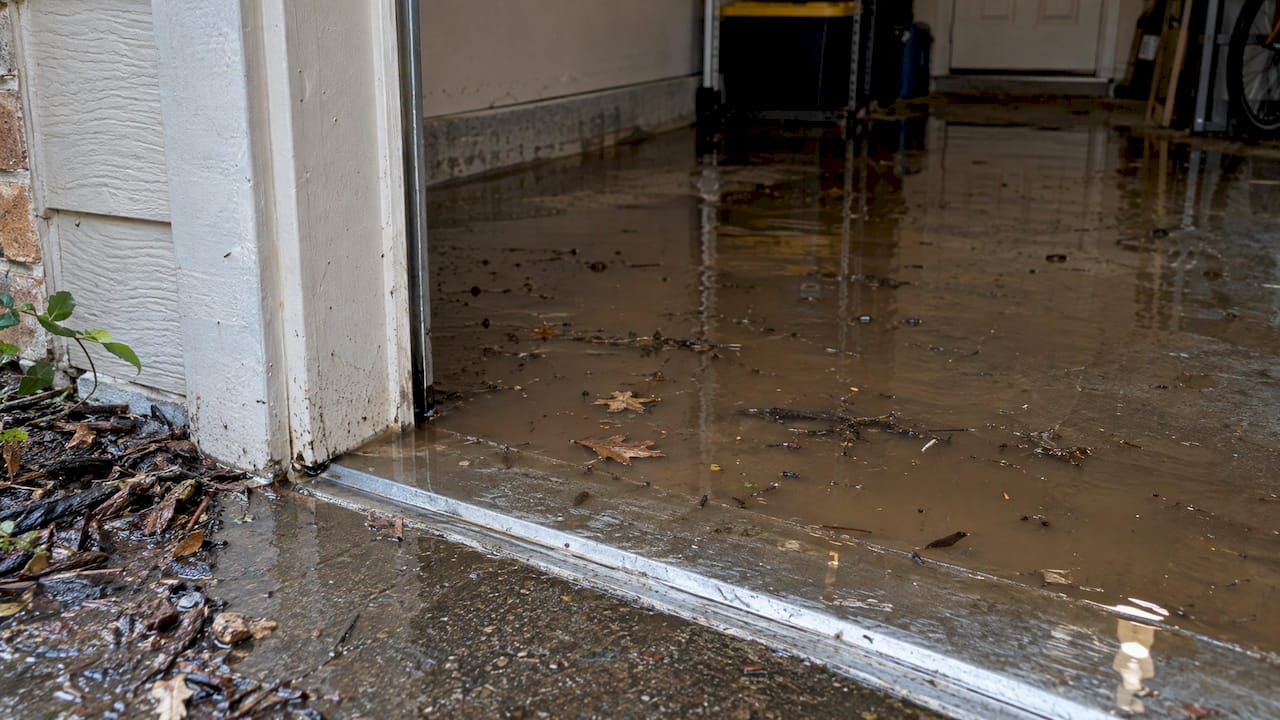
If the water is dark, smells like sewage or came from outside, treat it as contaminated. Do not wade through it, and do not try to dry or save porous items that touched it. That is the point where a hands-on cleanup stops being a weekend job. Sewage and contaminated floodwater call for protective equipment and proper disposal, which is part of the biohazard work we do.
Step 3: Document everything before you clean
Photos and video are the backbone of your claim, and they must come before cleanup. FEMA’s flood insurance claims checklist tells you to photograph and video damage from multiple angles and distances, inside and outside, including signs of structural damage and water lines on walls. It also says to record the make, model and serial number of appliances and electronics before discarding anything, unless an item is a health hazard or local law requires disposal.
A workable documentation routine:
- Walk each room with your phone and narrate what you see: the room, the source, what is wet.
- Take wide shots first, then close-ups of damaged floors, walls, ceilings and belongings.
- Mark water heights on walls with a pencil or painter’s tape. The Illinois Department of Natural Resources post-flood guide notes that adjusters and FEMA may use those heights in damage assessments.
- Photograph items you plan to discard, and keep small samples of flooring, carpet or wallpaper. FEMA’s recovery guidance asks for these samples.
- Make a written list of damaged belongings with approximate age and value.
Business owners and property managers should add inventory, equipment, tenant impact and any downtime to the list, since commercial policies may cover them separately.
Step 4: Call your insurer, and read before you sign
Report the loss as soon as it is safe to do so. FEMA says to have your policy declarations page on hand when you call, and an adjuster should contact you to schedule an inspection within a few days (FEMA). The ready.gov checklist puts the adjuster’s first contact at within 48 hours of your report, and it says to submit all claim documentation within 60 days of a flood, or the timeframe your adjuster gives you.
Delay can cost you. The NFIP publishes an appeal decision in which a denial was upheld for a policyholder who noticed floor damage in 2018 and told the insurer in April 2020. Mold and moisture damage that results from a condition within the policyholder’s control can be excluded.
Know which policy responds to which kind of water:
| Cause of water | Policy that usually responds |
|---|---|
| Flood: water rising from the ground up after heavy rain, storm surge or river overflow | Flood insurance |
| Wind-driven rain or fire damage | Homeowners policy |
| Burst pipe or appliance failure | Check your homeowners or commercial policy wording with your insurer |
The first two rows come from FEMA’s claims guidance, which adds that you may need to file with both insurers. Texas A&M AgriLife Extension’s flood cleanup guide says that without flood insurance, a homeowner’s policy likely will not cover flood loss.
One rule saves people money: FEMA says not to sign an agreement for cleaning, remediation or maintenance services before you consult your adjuster or insurer, so you know the work is covered. Ask the adjuster before you commit to any contractor. When you are ready, a restoration company that deals with insurers every day can take the paperwork off your hands. We communicate with insurance companies directly on our clients’ behalf, so you are not the go-between for estimates and scope questions.
Renting? Who pays depends on where the water came from and what your lease and policies say. Our guide to water damage in an apartment walks through who is responsible.
Step 5: Remove water and start drying
The clock matters most here. The U.S. EPA says to dry water-damaged areas and items within 24 to 48 hours to prevent mold growth, and that moisture control is the key to mold control (EPA guide to mold and moisture).
What that looks like in practice:
- Remove standing water. The CDC’s mold cleanup guide for homeowners and renters recommends a wet vacuum for floors, carpets and hard surfaces.
- Open doors and windows while you work, as the CDC’s 8 tips to clean mold advises.
- Add fans and dehumidifiers once electricity is safe. The CDC guide says not to use fans if mold has already started to grow, because they can spread spores.
- Open up the walls. The North Carolina guide says walls that were wet should be stripped to the studs, with insulation removed, and left open to dry. The South Carolina agency’s mold factsheet adds that wood studs must be completely dry before wallboard goes back.
- Have the HVAC system checked. If flooded, turning it on may spread mold through the house. Both the South Carolina and North Carolina guides say a professional should inspect and clean it first.
A household wet vac and a couple of fans handle a small spill. They rarely dry wall cavities, subfloors and padding fast enough after a larger loss, and you cannot see moisture trapped inside. That is why many property owners bring in a crew with commercial drying equipment on day one. Our water damage restoration service covers extraction, drying and, when needed, the rebuild, and our first 48 hours guide goes deeper on timing.
A ceiling that is stained, sagging or dripping needs its own approach, because water often pools above the drywall. See our guide to ceiling water damage repair.
What to throw away and what to keep
The rule of thumb from the CDC is simple: anything wet with floodwater that cannot be cleaned and dried completely within 24 to 48 hours should be taken outside. Photograph it first for your claim.
| Item | Usual result |
|---|---|
| Carpet and padding | Discard. The North Carolina guide says they cannot be cleaned well enough to prevent mold |
| Upholstered furniture, mattresses | Discard if not dried within 24 to 48 hours, or if exposed to sewage or contaminated water |
| Wet drywall and insulation | Remove, and let the framing dry fully |
| Solid wood furniture | Wipe, then dry thoroughly. Photograph before deciding |
| Hard, nonporous items (glass, metal, hard plastic) | Clean, disinfect and dry |
| Large appliances and electronics | Record make, model and serial number. Do not plug in until inspected |
For disinfecting hard surfaces, Texas A&M AgriLife says half a cup of household chlorine bleach per gallon of water works on nonmetallic, colorfast surfaces, but it will not stop new mold on materials that stay damp. Never mix bleach and ammonia, which creates toxic vapors (CDC).
Salvaging belongings in a damaged home is slow and bad for the items. Our contents pack-out service moves your belongings out of the affected area so the structure can be dried and rebuilt.
Why mold sets the deadline
The CDC guide is blunt: if your home was flooded and you could not dry it, furniture and other items included, within 24 to 48 hours, assume you have mold growth. Drying and removing water-damaged items is the most important step to prevent it. The North Carolina guide adds that people with allergies or asthma, weakened immune systems, and the very young or very old face greater health risks, so households with those members should act fastest.
Mold also affects your wallet. FEMA says flood and property policies do not cover mold damage if the policyholder fails to take action to prevent it, which makes quick drying a financial step as well as a health one.
Dallas-Fort Worth’s humidity makes lingering moisture easy to miss. Musty smells that return after rain are a warning sign, and they do not always come from the room that flooded. Notes on why a chimney smells after rain show how moisture finds its way into parts of a house people rarely check. Keep indoor humidity between 30% and 50% (EPA-based mold guidance), and watch attics, floor joists and the backs of cabinets in the weeks after a loss. We have guides on attic mold removal and mold on floor joists.
When testing helps
Sampling does not replace cleanup. The EPA and the South Carolina factsheet both note there are no federal limits for mold, so a lab result cannot be compared to a known safe level. Sampling is most useful for verifying that an area has been adequately cleaned or remediated, and it should be done by professionals following recognized methods.
That makes testing most valuable in two moments: when you suspect hidden mold after water sat for more than two days, and when you need proof that remediation worked, for an insurer, a buyer, a tenant or a lender. Our mold testing and inspection is listed at $600 for residential properties and $975 for commercial properties. Additional samples are $75 each for residential and $95 each for commercial. A residential Mold Remediation Protocol is listed at $1,000.

For mold larger than about 10 square feet, EPA-based guidance recommends a remediation contractor, and that is where our mold remediation service comes in.
When to bring in a restoration company
Handle a small, clean-water spill that you caught within hours yourself. Call a restoration company when any of these is true:
- Water reached walls, subfloors, insulation or ceilings.
- It has been, or will be, more than 24 hours before the area is dry.
- The water was contaminated, or you do not know where it came from.
- The HVAC system or electrical panel was exposed.
- Mold is visible or the building smells musty.
- Your claim is large enough that documentation, scope and insurer communication become a job on their own.
- You manage a commercial property or several units and cannot leave spaces closed for long.
Before work starts, confirm with your adjuster that the services are covered, as FEMA advises. Fire damage often brings water damage too, from firefighting. If that is your situation, see our guide to fire and smoke restoration. Commercial owners can read about our commercial restoration services.
Water damage in Dallas-Fort Worth: our service
Owl Restoration handles water, fire and mold damage across Dallas, Tarrant, Ellis and Johnson counties. We respond around the clock, and our certified professionals use advanced equipment to take a property from initial mitigation through full reconstruction. We work directly with your insurance company, so you can focus on your family or your business.

If you have water in your home or building right now, start with our water damage restoration page or contact us through waterfiremoldremediation.com.
Our perspective
Most of the losses we see get bigger for the same reason: the first day was spent waiting. Owners wait for the adjuster, wait for the water to “go away” or wait to see whether a stain spreads. Water does not wait.
Our approach follows the same order as this guide. Make it safe, document it, bring in your insurer, and get moisture out of the structure fast. Our team responds to water, fire and mold losses within 24 to 48 hours, and we keep one team accountable from mitigation through rebuild, so the same people who dry your property can put it back together.
We also handle the insurer conversation directly. Homeowners, business owners and property managers should not have to translate drying logs and scopes of work for an adjuster in the middle of an emergency. That is what we take on, so you can make decisions with a clear head.
Dustin
FAQ
How long do I have before mold starts after water damage?
The EPA and CDC both point to 24 to 48 hours. Dry the area and its contents within that window to prevent mold, and assume mold has started if you could not. If water sat longer, a professional inspection can tell you how far it spread.
Should I call my insurance company or a restoration company first?
Call your insurer as soon as it is safe, and keep your policy declarations page handy. FEMA says not to sign a cleaning or remediation contract before consulting your adjuster or insurer. You can still begin protective steps, such as stopping the water and drying, while you wait.
Is it safe to go back into a house after it floods?
Not until officials say the area is safe. Stay out if the power is on, you smell gas, or the framing or foundation looks damaged. If water reached your outlets, keep the main breaker off until a licensed electrician inspects the system. Have a building inspector examine the home if it has damage.
Does homeowners insurance cover water damage?
It depends on the cause. FEMA says homeowners policies do not cover flood water damage but may cover wind-driven rain or fire, and flood insurance covers damage directly caused by flood. Ask your insurer which policy applies to your loss.
Do I need mold testing after water damage?
Not always. If mold is visible, the loss is already known and cleanup is the priority. Testing is most useful when you suspect hidden mold, or when you need to confirm the area was properly remediated.
Sources
- Flood Recovery Checklist, National Flood Insurance Program
- Safety Guidelines: Reentering Your Flooded Home, CDC
- After the Flood: Getting Back Into Your Home Safely, NC DHHS
- FEMA flood claims guidance
- Starting Your Recovery After a Flood, FEMA
- Flood Insurance Claims Checklist, ready.gov
- NFIP appeal decision on mold, mildew and moisture
- Cleaning Flood Damaged Homes, Texas A&M AgriLife Extension
- Homeowner’s and Renter’s Guide to Mold Cleanup After Disasters, CDC
- 8 Tips to Clean Mold, CDC
- Indoor Mold factsheet, South Carolina
- Illinois post-flood quick guide, June 2026
- A Brief Guide to Mold, Moisture, and Your Home, U.S. EPA
- Responding to Indoor Mold Concerns guide
- Chimney Smells After Rain: Causes and Fixes