
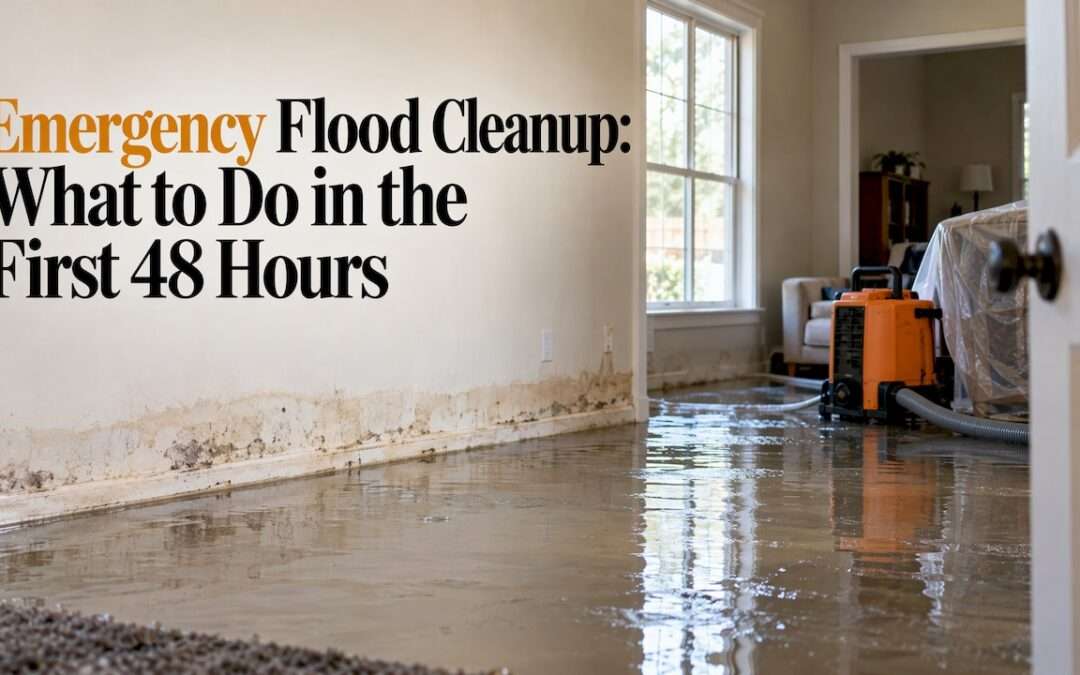
If your home or business has flooded, the order of your first moves matters more than speed alone. Get everyone out of danger, keep away from electricity and standing water, photograph the damage, and call a professional restoration crew so water removal and drying start within 24 to 48 hours. Federal health guidance sets that window: clean up and dry your home quickly after the flood ends, within 24 to 48 hours if possible. This guide walks through each step for North Texas property owners.
TL;DR
- Safety first: stay out of floodwater, treat wet electrical equipment as live, and return only when officials say it is safe.
- Photograph and video everything before you move or discard anything. Your claim depends on it.
- Water removal and drying should begin within 24 to 48 hours. Mold can grow on wet materials after 24 hours.
- Floodwater can carry sewage and other contamination, so porous materials that cannot be dried quickly usually have to go.
- We respond 24/7 across Dallas-Fort Worth and handle everything from mitigation to rebuild, including coordination with your insurer.
Table of Contents
- When flooding is an emergency
- Your first hour: safety before cleanup
- Document before you touch anything
- Why floodwater is different from a plumbing leak
- The emergency flood cleanup sequence
- The 24-hour mold clock
- Flood insurance: what to know before you call your carrier
- What affects the scope and cost of flood cleanup
- Who we serve and how to reach us
- Get a crew moving today
- Common mistakes in the first 48 hours
- FAQ
- Sources
When flooding is an emergency
Any water that enters a building from outside, or backs up from a drain or sewer, is an emergency. So is a burst supply line that has soaked carpet, drywall and subfloor. The reasons are the same: water spreads into materials quickly, electrical hazards appear, and the clock on mold starts.
Floods in North Texas often arrive fast. The Texas Department of Insurance notes that Texas is particularly prone to floods, including a band called Flash Flood Alley that runs through Central and North Texas. A creek that was calm at noon can be in your garage by evening.
Treat the situation as an emergency when any of these is true:
- Water is covering electrical outlets, or cords are sitting in it.
- Water came from a sewer line, toilet overflow or storm runoff rather than a clean supply line.
- Standing water has been in the building for more than a few hours.
- Carpet, drywall, insulation or cabinets are saturated.
- You can smell mustiness or see discoloration on walls.
Your first hour: safety before cleanup
The cleanup can wait ten minutes. Your safety cannot.
Get out and stay out of the water
Official guidance is blunt: evacuate immediately if told to, and do not walk, swim or drive through floodwaters. The National Weather Service adds that you should stay out of basements and rooms where water covers electrical outlets or cords are submerged. Wait until local authorities say it is safe to return.
Electricity and gas
Standing water can carry current. The CDC says that if you have standing water and can reach the main power switch from a dry spot, turn the power off even if that delays cleaning. If reaching the panel means stepping into water, call an electrician instead. The NFIP recovery checklist also says to have an electrician check your system before turning power back on.
Is the building safe to enter?
The EPA recommends that a qualified professional verify that a visibly unsafe building is safe before you go in. Sagging ceilings, shifted foundations and strong gas odors are reasons to wait for an inspection by the fire department, a structural engineer or your utility.
Protect your body
Wear rubber gloves, long pants, sturdy shoes, a face mask and goggles when you clean or remove mold. If your skin touches floodwater, the CDC says to wash with soap and clean water as soon as possible, or use alcohol-based wipes or sanitizer if you have neither.
Document before you touch anything
Insurance adjusters need proof of what the water did. Once you start hauling out carpet, that proof is gone. FEMA’s claim guidance says to photograph and video structural damage, standing water levels inside and outside, and damaged appliances and furniture before moving or discarding anything.
A practical checklist:
- Walk every affected room and film slowly, then take stills of each wall, floor and ceiling area.
- Photograph the water line on walls and any marks outside the building.
- Capture make, model and serial numbers on appliances. FloodSmart also advises you keep carpet samples.
- Write a room-by-room list of damaged contents with approximate age and value.
- Only after photos, set aside items that pose a health risk. FEMA lists perishable food, clothing, cushions and pillows among them.
Save receipts for anything you buy for emergency mitigation, and keep a log of calls with your insurer.
Why floodwater is different from a plumbing leak
A broken supply pipe releases clean water. Floodwater does not. The CDC warns that floodwater can contain dangerous bacteria from overflowing sewage and agricultural and industrial waste. Skin contact alone is not a serious health risk, but eating or drinking anything contaminated with floodwater can cause disease.
That is why restoration pros sort flood losses by what the water touched. Porous items such as carpet padding, insulation, upholstered furniture and soaked drywall that cannot be dried fast are usually discarded, not saved. Hard surfaces such as concrete, tile and sealed wood can often be cleaned and dried in place.
Sewage backups and any loss involving contaminated material may also call for biohazard cleanup rather than standard water extraction.
The emergency flood cleanup sequence
A professional flood response follows a consistent order. Knowing it helps you judge the plan you are given.
1. Stop the source and assess
The crew confirms the water has stopped entering, shuts off or isolates affected utilities, and maps how far moisture has traveled. Moisture meters and thermal imaging find water hidden behind walls and under floors that your eyes miss.
2. Extract standing water
Bulk water comes out first with pumps and extractors. The CDC notes homeowners can remove standing water with a wet-dry shop vacuum, pump or sump pump if electricity is safe, or generator-powered equipment if it is not. Professional extraction moves far more water far faster, which shortens the time materials stay saturated.
3. Remove what cannot be saved
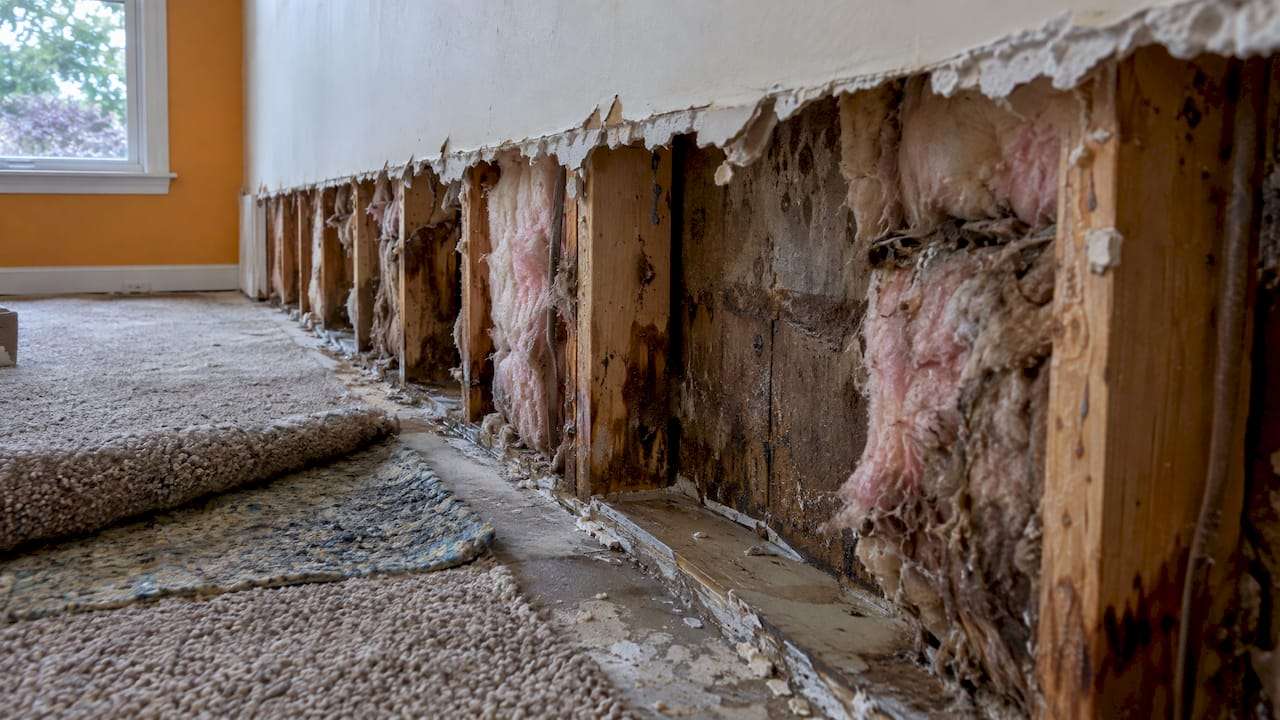
Saturated carpet pad, wet insulation and drywall that has wicked water upward are cut out. The EPA advises sorting and discarding materials you cannot clean and dry. Removal also opens wall cavities so they can dry.
4. Clean and sanitize
The EPA recommends gently cleaning surfaces with a cloth dampened with clean water and detergent, then using dry tools to remove remaining debris. The same page says to use methods that keep contaminants out of the air, avoiding stirring up dust or scrubbing hard the first time.
5. Dry structurally
Air movers and dehumidifiers pull moisture out of framing, subfloors and the air. The EPA says to open doors and windows to ventilate and to dry everything completely. If mold is already visible, it advises waiting to run fans or dehumidifiers until after you gently clean it.
Drying is monitored with readings until materials reach normal moisture levels. A surface that feels dry can still be wet inside.
6. Protect contents
Furniture, electronics, documents and keepsakes may be packed and moved off site for cleaning and storage while the structure dries. Contents pack-out keeps belongings out of the work zone and away from continued moisture.
7. Rebuild
Once the structure is dry and verified, the removed materials are replaced: drywall, insulation, flooring, trim and paint. Having the same company handle reconstruction and build-back avoids the gap between mitigation and repairs where projects often stall.
The 24-hour mold clock
Mold is the secondary disaster of nearly every flood. The EPA says flood water can make indoor air unhealthy, and mold can grow on wood, drywall, carpet and furniture if they stay wet for more than 24 hours.
What that means in practice:
- Start extraction and drying the same day you can safely enter.
- Do not run your HVAC system if it was flooded. The CDC advises having it checked and cleaned by a service professional experienced in mold cleanup first, because running a contaminated system can spread mold through the house.
- If you clean mold yourself, never mix cleaning products. The CDC specifically warns that mixing bleach and ammonia can create toxic vapors. If you use bleach, the CDC says to mix 1 cup of household bleach per 1 gallon of water, wear goggles, an N-95 respirator and gloves, and open windows and doors first.
When mold testing makes sense
Test when you smell mustiness but cannot see the source, when the water sat for days before you could act, or when you want a documented baseline before and after remediation. Our residential mold testing and inspection is $475, and commercial is $975. Additional samples are $75 each for residential and $95 each for commercial. Our residential mold remediation protocol is $1,000. Details are on our mold testing page, and if testing confirms growth, our mold remediation team handles the removal.
Flood insurance: what to know before you call your carrier
Flood coverage trips up many Texas owners. The Texas Department of Insurance says most home insurance policies do not cover flood damage and a separate flood policy may be needed. Water that comes from a burst pipe is a different cause of loss than rising surface water, so how your loss is described matters. Read your policy and talk to your agent or adjuster about which applies.
If you have a National Flood Insurance Program policy, two points affect how you clean:
- FloodSmart advises you to start drying belongings promptly because NFIP policies do not cover mold damage.
- FEMA states that policyholders are responsible for minimizing mold growth, and the policy will not cover mold damage when the policyholder fails to take reasonable action to prevent its growth and spread.
In other words, fast drying protects your property and your claim. We coordinate directly with insurance companies, so documentation, scope and invoices flow to your adjuster without you relaying every detail.
Our perspective
We see the same pattern on nearly every flood call in Dallas-Fort Worth. The water itself does limited harm in the first hours. The damage that costs the most comes from the days that follow, when wet drywall and subfloor stay wet and mold gets established. That is why we built our response around speed: our crews are available 24/7 and aim to start work on water, fire and mold losses within 24 to 48 hours.
We also think a flood loss should not mean juggling five companies. A property owner has enough to deal with. Mitigation, contents pack-out, mold testing, remediation and reconstruction are all things we do, and having one team own the job from first extraction to final paint means no gaps, no finger-pointing and one point of contact when the adjuster calls.
Our certified professionals use professional drying and monitoring equipment because guessing about moisture is how callbacks happen. If you are standing in a wet living room right now, make it safe, take your photos, and call us. We will take it from there.
Dustin
What affects the scope and cost of flood cleanup
We do not publish a flat price for water damage restoration because no two floods are alike. The scope is set on site. These factors drive it:
| Factor | Why it matters |
|---|---|
| Water category and source | Sewage or storm runoff requires more removal and sanitizing than clean supply water |
| Time since the flood | Longer saturation means more materials to remove and higher mold risk |
| Area and number of rooms | More square footage means more equipment and drying days |
| Materials affected | Hardwood, carpet, drywall and insulation each dry or fail differently |
| Level of the building | Basements and lower levels often hold water longer |
| Contents involved | Pack-out and cleaning add labor but protect belongings |
| Reconstruction needed | Rebuild scope depends on what had to be removed |
A useful crew explains the scope before work starts and ties it to the readings they took. Ask for the plan in writing, and share it with your adjuster.
Who we serve and how to reach us
We work in Dallas, Tarrant, Ellis and Johnson counties for homeowners, business owners and property managers. Local pages cover Arlington, Mansfield and Midlothian. For offices, retail and multi-unit properties, see our commercial restoration services, since downtime costs a business money every hour.
Get a crew moving today
Owl Restoration provides emergency water damage restoration across Dallas-Fort Worth, with extraction, drying, mold testing and remediation, contents pack-out and full reconstruction under one roof. We work directly with your insurance company and respond around the clock through our 24/7 emergency restoration line.

If the water is already out and the building is safe to enter, the next call you make should be to a restoration crew, because every hour of saturation adds to the final bill.
Common mistakes in the first 48 hours
- Turning on the power too soon. Wet outlets and panels need an electrician’s check first.
- Throwing everything away before photographing it. You lose the evidence your claim needs.
- Waiting for the adjuster before drying. Mitigation is expected of you, and mold is not covered under NFIP when reasonable steps were skipped.
- Running the HVAC. A flooded system can push contamination through every room.
- Using fans on visibly moldy surfaces first. The EPA advises gentle cleaning before fans or dehumidifiers when mold is visible.
- Mixing cleaners. Bleach and ammonia together release toxic vapors.
- Eating or drinking anything touched by floodwater. That is the route the CDC identifies for illness.
FAQ
How soon should flood cleanup start?
As soon as it is safe to enter. The CDC recommends cleaning and drying within 24 to 48 hours if possible, and the EPA says mold can grow on materials that stay wet more than 24 hours. Call a restoration company the moment you have photographed the damage.
Is it safe to stay in the house during cleanup?
That depends on the water source, the extent of damage and whether power and gas are safe. Sewage-contaminated areas and homes with unverified electrical or structural conditions should be vacated until a professional clears them. Ask your crew which rooms are safe.
Does homeowners insurance cover flood cleanup?
Most standard home policies exclude flood, according to the Texas Department of Insurance, so a separate flood policy may apply. Sudden internal water events can fall under a different part of your coverage. Contact your agent promptly, and we will coordinate documentation with your insurer.
Can I save my carpet and drywall after a flood?
Sometimes, if the water was clean and drying began quickly. Flood-contaminated carpet pad, insulation and saturated drywall are typically removed because they cannot be dried and cleaned reliably. A moisture assessment on site settles the question.
Do I need mold testing after a flood?
It is worth doing when you smell mustiness without a visible source, when drying was delayed, or when you want a documented baseline. Our residential testing is $475 and commercial is $975, with extra samples priced per sample.
Sources
- Floods | Ready.gov
- During a Flood | Weather.gov
- Coming Home | US EPA
- Safety Guidelines: Reentering Your Flooded Home | CDC
- Guidelines for Cleaning Safely After a Disaster | CDC
- Preparing to Return Home After a Natural Disaster | CDC
- 8 Tips to Clean Up Mold | CDC
- Flood Cleanup to Protect Indoor Air and Your Health | US EPA
- Flood Recovery Checklist | FloodSmart
- How Do I Start My Flood Claim? | FEMA
- NFIP mold guidance | FEMA
- Flood insurance: Why you need a policy | Texas Department of Insurance