by Author | Nov 12, 2026 | Blog
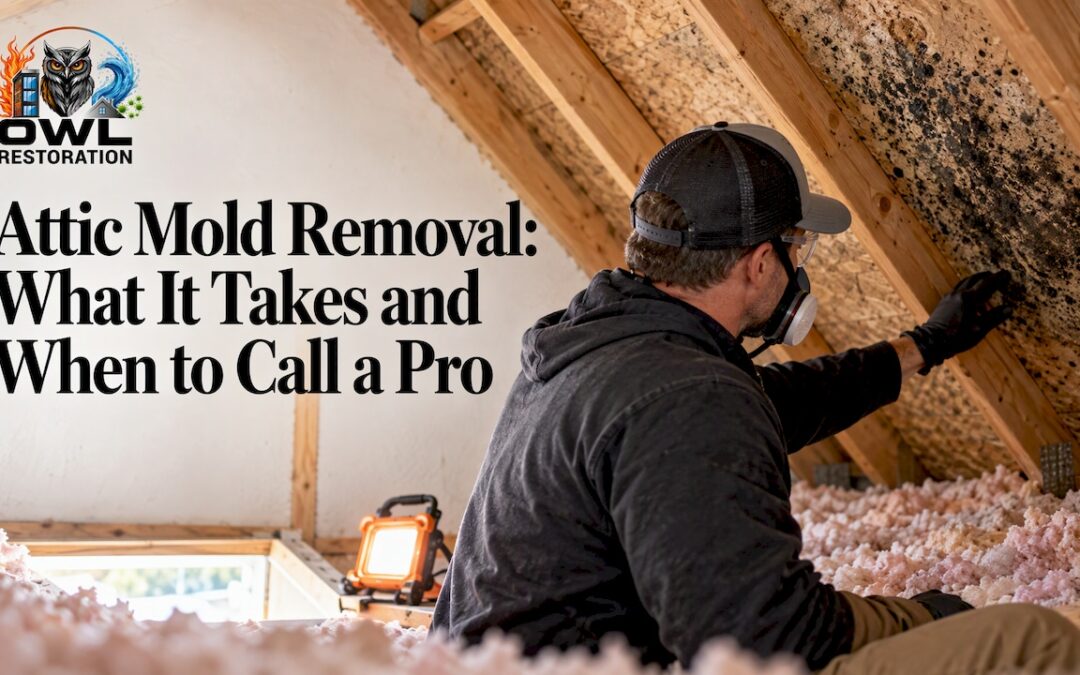
Mold in an attic is removed in two parts: the moisture feeding it is stopped, then the growth is contained and taken out of the framing, sheathing and insulation without spreading spores into the house. Anything beyond a small patch is a job for a remediation crew. In...

by Author | Nov 11, 2026 | Blog
If water is coming through your apartment ceiling, walls or floor, stop the source if you can, get everyone and everything valuable out of the wet area, photograph it, and report it to management in writing the same day. Then get the structure dried fast, because mold...
by Author | Nov 10, 2026 | Blog
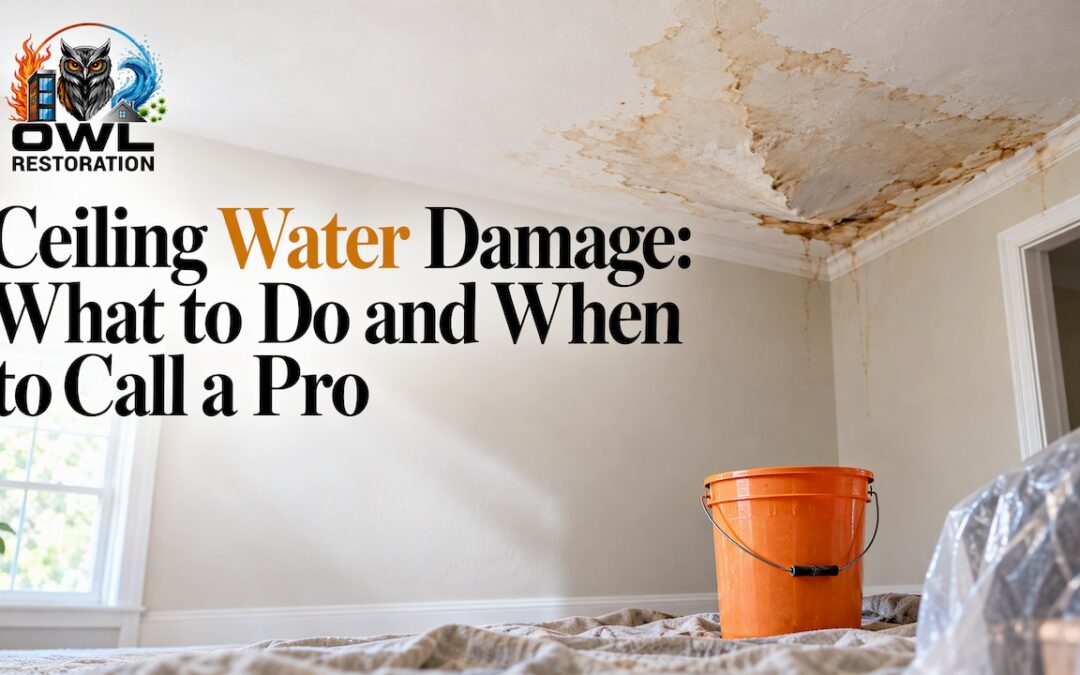
Repairing a water-damaged ceiling takes four jobs, in this order: stop the water, dry everything above and below the ceiling, replace whatever can’t be saved, then prime, texture and paint. Skip the first two and the stain comes back, often with mold. If the ceiling...

by Author | Nov 9, 2026 | Blog
If blood or other body fluids have been left behind after an accident, injury, unattended death or crime, hire a trained biohazard crew to clean it. Do not scrub it yourself. Blood can carry pathogens, it soaks into porous materials like carpet, drywall and subfloor,...

by Author | Nov 8, 2026 | Blog
Smoke odor leaves a house only when the soot and residue causing it are removed. For light smoke, that means ventilating, cleaning surfaces and absorbent items, and filtering the air. For moderate to heavy smoke, it usually means professional cleaning of walls,...
by Author | Nov 7, 2026 | Blog
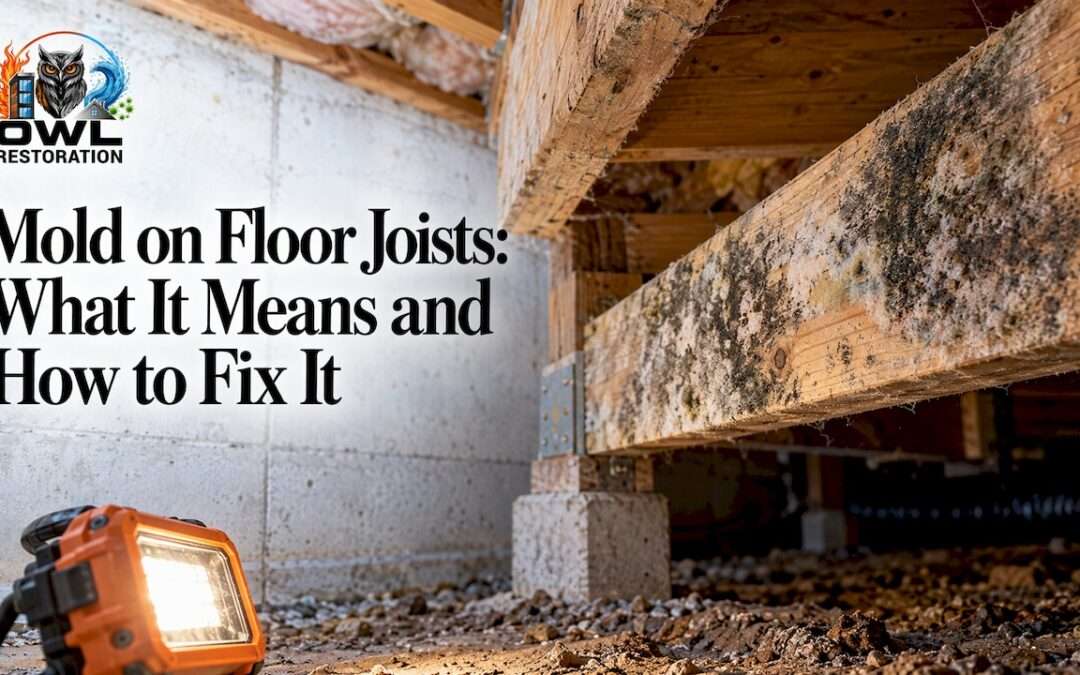
Mold on floor joists means moisture is reaching the wood under your home, and the growth will return until that moisture is fixed. A small patch on a joist can usually be scrubbed off with detergent and water once the wood is dry. Larger areas, soft wood, or growth...